


Demurrage & Detention in Dubai Ports: How FCL Shippers Can Avoid Heavy Losses
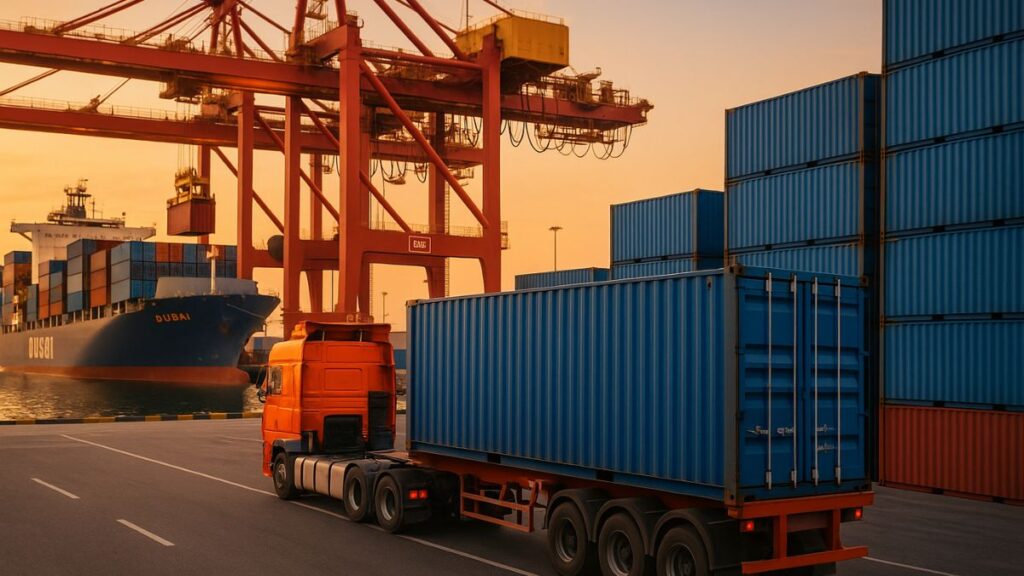
For businesses moving Full Container Load (FCL) cargo through Dubai, freight charges alone do not reflect the true landed cost of shipping. One of the largest hidden threats to profitability comes from demurrage and detention (D&D)—penalties that quietly accumulate when containers are delayed inside the port or returned late after delivery. Many importers only realise the damage when these charges explode into five-figure invoices.
With Dubai operating one of the busiest maritime gateways in the world, particularly through Jebel Ali Port, time is not just money—it is contractual liability. In this environment, avoiding demurrage and detention is not about reacting after delays occur. It requires systematic planning, disciplined documentation, real-time visibility, and expert freight forwarding in Dubai support.
Understanding Demurrage & Detention in the Dubai Context
Demurrage is the fee charged by the shipping line when a loaded container remains inside the port or terminal beyond the agreed free-time window, which is usually 3–7 days for imports in Dubai. Once those free days expire, each delayed day attracts a growing daily penalty.
Detention, on the other hand, applies after the container exits the port. When the container is delivered to your warehouse, you are given a limited number of free days to unload and return the empty container to the nominated depot. Any delay beyond this window triggers detention charges.
In Dubai, these charges vary by:
- Shipping line
- Container type
- Trade route
- Seasonality
Daily penalties can range from AED 75 to over AED 1,000 per container per day, and they usually increase the longer the delay continues. For FCL shipments, where each container holds high-value bulk cargo, even a short delay can wipe out profit margins.
Why Demurrage & Detention Are More Dangerous in Dubai Than Many Other Ports
Dubai operates at maximum port velocity. Jebel Ali does not function like a slow-moving regional port—it runs at the scale of global mega-hubs. This creates several unique risks:
First, Dubai applies strict free-time enforcement. Extensions are not automatic and depend heavily on the shipping line’s discretion.
Second, shippers face dual charging exposure. Many businesses mistakenly assume that demurrage and port storage are the same. They are not. Shipping line demurrage covers container usage, while port storage charges apply for occupying terminal land space. In Dubai, both can run at the same time, dramatically compounding losses.
Third, weather-related disruptions such as sudden dust storms and dense winter fog frequently suspend marine traffic. While these delays are acts of nature, demurrage does not pause automatically unless negotiated.
Finally, peak congestion during festival seasons and global trade surges pushes clearance windows tighter, making delays harder to absorb.
The UAE Maritime Law Angle: Why Contracts Matter More Than Ever
Under the UAE Federal Decree-Law No. 43 of 2023 (New Maritime Law), demurrage and detention are treated as contractual commercial claims, not just operational penalties. This carries serious implications.
Liability is often presumed against the carrier for unjustified delays unless force majeure or shipper negligence is proven. However, most disputes depend entirely on how your transport contracts and Incoterms allocate risk.
Poorly drafted clauses expose importers to:
- Unlimited detention liability
- Unclear responsibility during customs holds
- Weak grounds for dispute or waiver
This is why legally clean freight contracts are no longer optional for FCL shippers operating at scale.
How Demurrage & Detention Directly Impact FCL Profitability
For FCL shippers, these charges damage far more than shipping budgets. They disrupt:
- Inventory planning
- Production cycles
- Downstream distribution
- Customer delivery commitments
- Cash-flow stability
Unlike LCL shipments, where costs are distributed across multiple consignees, FCL penalties hit one business in full. A single stuck container can stall an entire project timeline in construction, manufacturing, or retail expansion.
How to Avoid Demurrage & Detention Losses in Dubai Ports
Avoiding D&D losses is not achieved through one single action—it requires synchronised operational discipline.
1. Documentation Must Be Final Before Vessel Arrival
In Dubai, documentation delays remain the number one trigger of demurrage. Commercial invoices, packing lists, HS codes, certificates of origin, VAT and duty calculations must be validated before the vessel even berths. Pre-clearance filing through Dubai Customs significantly reduces container idle time.
2. Real-Time Tracking Is No Longer Optional
Modern shippers rely on real-time visibility tools that track:
- Vessel arrival
- Container discharge
- Customs release
- Gate-out status
This visibility enables proactive planning instead of reactive firefighting. Businesses using structured tracking reduce D&D exposure dramatically—especially when supported by professional freight forwarding in Dubai operations.
3. Warehouse Readiness Prevents Detention
Detention often has nothing to do with customs—it happens because the warehouse is not ready. Before container pickup:
- Yard space must be confirmed
- Labour and forklifts must be scheduled
- Unloading sequences must be planned
- Empty container return transport must be booked
If the empty container sits idle after unloading, the detention clock starts ticking.
4. Free-Time Negotiation Is a Powerful Financial Tool
Many shippers never negotiate free days, assuming they are fixed. They are not. High-volume shippers regularly negotiate:
- Extended demurrage-free days
- Additional detention buffers during peak season
Even mid-scale importers often secure extra time simply by requesting it during carrier contracting.
5. Shipper-Owned Containers (SOCs) as a Strategic Weapon
SOCs completely bypass carrier detention rules since the shipper owns the container. This gives:
- Full control over unloading schedules
- Flexible return times
- Zero detention exposure
For project cargo, offshore equipment, and slow-unloading industrial shipments, SOCs can save massive detention losses.
The Critical Role of Freight Forwarders in Damage Prevention
A professional freight forwarding company in Dubai does far more than move containers. It acts as the control centre for:
- Advance customs filing
- Vessel ETA tracking
- Port release coordination
- Empty container return scheduling
- Emergency waiver negotiation
Strong forwarders also audit demurrage and detention invoices aggressively. Timing calculation errors are surprisingly common, particularly around when free-time actually begins—vessel arrival, discharge date, or container availability.
Special High-Risk Cargo: EV Batteries & Dangerous Goods
EV batteries and dangerous goods introduce another layer of D&D exposure. These cargo types face:
- Additional port safety inspections
- Carrier-specific acceptance windows
- Segregated stacking requirements
- Restricted container movement inside terminals
A single documentation error can freeze these containers for extended periods. Only forwarders with EV and DG certification experience should handle these shipments under FCL rules.
How Sea Freight Operations Multiply or Minimise D&D Risk
Efficient Sea freight services Dubai providers structure operations around fast documentation flow, priority discharge coordination, early gate-out booking, and container return planning, and selecting the Best Shipping Method from Dubai plays a decisive role in reducing demurrage and detention exposure right from the planning stage.
Demurrage vs Detention: The Simple Operational Difference
Demurrage applies when the container is delayed inside the port.
Detention applies when the container is delayed outside the port after pickup.
Both operate on separate clocks, separate tariffs, and separate escalation slabs. Managing one without planning for the other still leads to financial loss.
Conclusion
Demurrage and detention are not accidental costs in Dubai—they are predictable consequences of poor timing, weak documentation discipline, and fragmented logistics coordination. For FCL shippers, these charges represent one of the greatest silent threats to profit stability.
With Dubai’s high-speed port ecosystem, avoiding these losses requires:
- Early documentation control
- Active container tracking
- Legally sound contracts
- Negotiated free-time
- Ready warehouses
- Technologically enabled visibility
- And expert freight forwarding in Dubai oversight
When managed professionally, demurrage and detention become controllable variables, not uncontrollable penalties. For businesses serious about scaling containerised trade through Dubai, mastering these costs is not optional—it is a strategic necessity.
